


Phone: 0086-13835148369
Tel: 0086-351-6814836 Ext.8032
Fax: 0086-351-8390339
E-mail: sxmidas.com@aliyun.com
Website2:www.midaspipelines.com
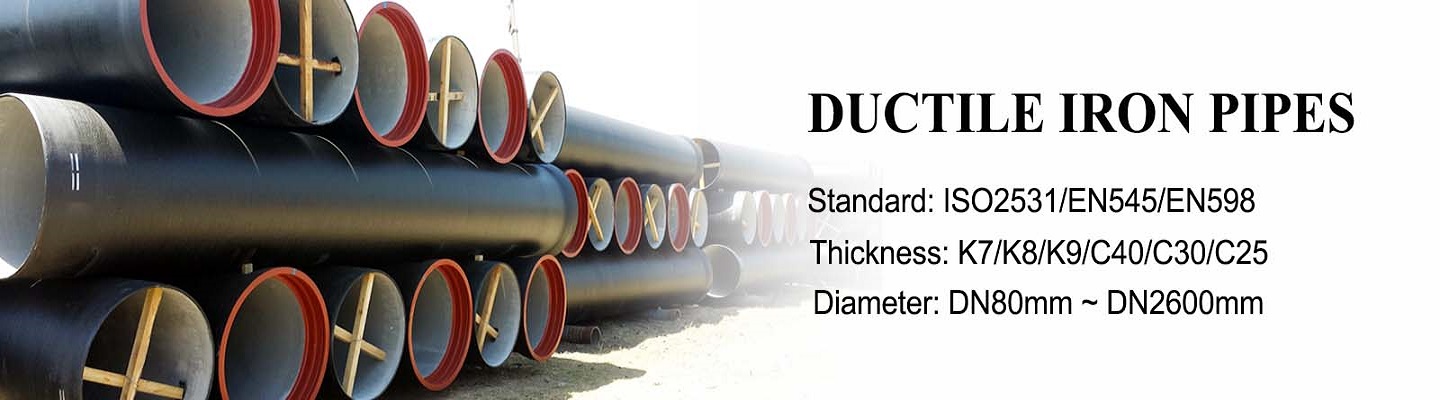
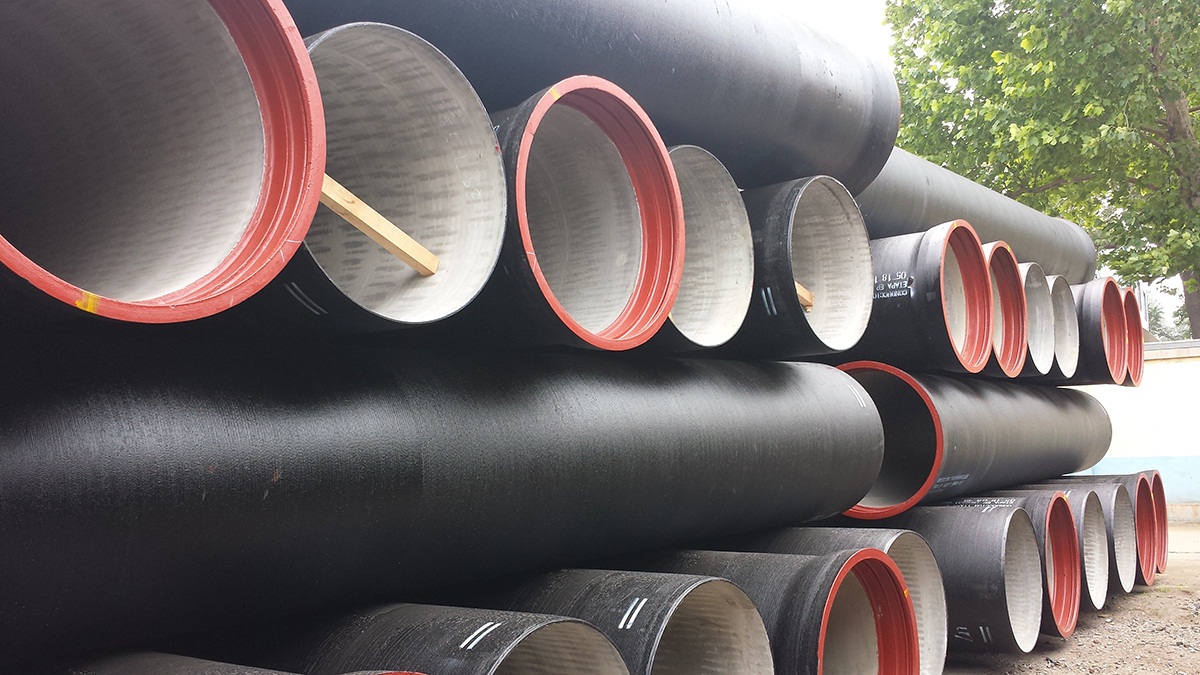
Large-diameter ductile iron pipes are characterized by their large diameters, high single-pipe weights, and strict installation accuracy requirements. In the construction of municipal water supply and drainage, long-distance water transmission, and other projects, they face multiple technical difficulties, such as transportation, hoisting, interface treatment, and foundation adaptation, which directly affect the operational stability and service life of the pipe network. The specific difficulties and corresponding strategies are as follows:
Core Difficulties
1. High single-pipe weight: Large-specification ductile iron pipes can weigh several tons per piece, making conventional truck transportation prone to pipe displacement and rollover risks. Direct binding with steel wire ropes during loading and unloading may squeeze the pipe wall, causing local deformation of the cast iron pipe or damage to the external anti-corrosion coating, thus undermining anti-corrosion performance.
2. Impact of bumps during long-distance transportation: Road bumps can easily cause collisions between the pipe body and the carriage, as well as between pipes, leading to collision damage at the socket and spigot of the interface and affecting the subsequent sealing connection effect.
Solutions
1. Customized transportation plan: Use low-bed semi-trailers for transportation. Lay rubber cushion pads inside the carriage, and isolate and fix the pipes from the carriage and between pipes with flexible slings to avoid rigid contact. Install limit brackets during long-distance transportation to prevent pipe rolling and displacement.
2. Professional loading and unloading process: Adopt special lifting tools, and strictly prohibit direct binding of the pipe body with steel wire ropes. Keep the pipes horizontal during lifting, and lift and lower slowly to avoid impact damage caused by sudden stops and lifts. Assign special personnel to direct the loading and unloading site and demarcate a safe operation area.
Core Difficulties
1. Limited hoisting space: Most municipal projects are carried out in urban roads and residential areas, where buildings and underground pipelines are often closely spaced. The limited operation radius of cranes makes it challenging to hoist pipes into the trench accurately. Manual adjustments can easily lead to the pipes colliding with the trench walls or supporting structures, which may result in deformation of the pipe openings.
2. Great difficulty in butt joint inside the trench: Large-diameter pipes have high self-weight, and the space inside the trench is narrow. The traditional manual prying method for interface alignment is inefficient and may easily scratch the sealing surface of the socket and spigot, affecting interface tightness.
Solutions
1. Optimization of hoisting equipment selection and stationing: Select small crawler cranes or truck cranes according to the pipe diameter and construction space, and prioritize one-sided stationing for construction. In narrow areas, use gantry frames combined with chain hoists for hoisting to improve positioning flexibility.
2. Precise butt joint tools inside the trench: Use specialized pipe aligners. After initially positioning the pipe socket and spigot, adjust the axis deviation with the pipe aligner to ensure that the interface's concentricity meets the required standards. During the butt joint process, apply a special lubricant to the sealing surface to reduce friction damage. Additionally, avoid striking the pipe orifice with hard objects.
Previous: Selection Guide for Ductile Iron Pipe T-type Socket Fittings
Next: PE Pipe vs PVC/PPR Pipes: Performance Differences and Application Scenario Matching
Phone: 0086-13835148369
Tel: 0086-351-6814836 Ext.8032
Fax: 0086-351-8390339
E-mail:sxmidas.com@aliyun.com