


Phone: 0086-13835148369
Tel: 0086-351-6814836 Ext.8032
Fax: 0086-351-8390339
E-mail: sxmidas.com@aliyun.com
Website2:www.midaspipelines.com
In the world of piping, few components are as fundamental and universally relied upon as the flange. It serves one primary purpose: connecting pipes, valves, pumps, and other equipment into a cohesive, leak-tight system. While welding creates permanent bonds, flanges offer the flexibility to assemble, disassemble, inspect, and modify systems without cutting or replacing pipe sections—a feature that translates directly into reduced downtime and lower lifecycle costs.
What Defines a Flange?
A flange is essentially a flat, circular disc with a central opening matching the pipe bore, surrounded by evenly spaced bolt holes. When two flanges are bolted together with a compressible gasket between them, the result is a mechanical joint that can withstand internal pressure, temperature fluctuations, and external loads. The key metric is that flange connections are both strong enough for demanding services and practical enough for routine maintenance.
Major Flange Types by Design
The selection of flange type significantly influences installation ease, performance under stress, and long-term reliability:
· Weld Neck Flange: Features a long tapered hub that merges smoothly with the pipe wall through a full-penetration butt weld. The gradual transition reduces stress concentration at the joint, making this the preferred choice for high-pressure, high-temperature, or cyclic loading conditions.
· Slip-On Flange: Slides over the pipe end and is welded both internally and externally. Easier to align during installation and more economical for lower-pressure applications where extreme stress resistance is not required.
· Threaded Flange: Contains tapered threads that engage with matching external threads on the pipe. No welding is involved, making it suitable for applications where welding is hazardous, such as explosive atmospheres, or where disassembly is expected.
· Socket Weld Flange: The pipe is inserted into a recessed socket at the flange face and fillet-welded around the outside. Compact and strong, this design is common in small-bore, high-pressure systems.
· Lap Joint Flange: Used with a separate stub end that is butt-welded to the pipe. The flange itself rotates freely over the stub end, allowing easy bolt hole alignment—particularly useful for systems requiring frequent dismantling.
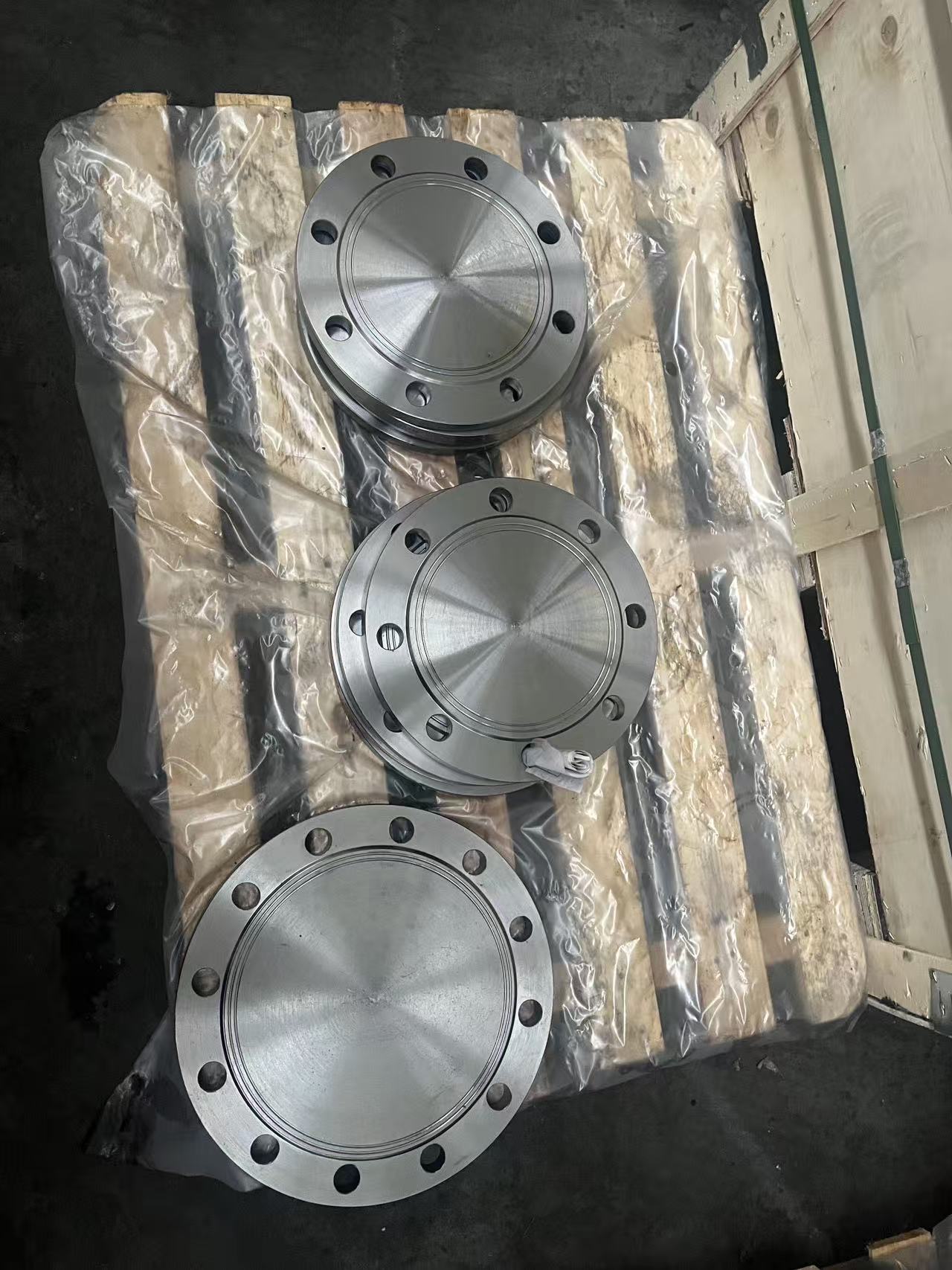
· Blind Flange: A solid disc without a central opening. It is bolted to another flange or directly to a pressure vessel to seal off pipe ends, nozzles, or openings during maintenance or for future expansion.
Gaskets and Bolting – Completing the Joint
A flange connection is only as good as its gasket and fasteners. Common gaskets include full-face sheet gaskets, spiral-wound metal-and-filler designs, corrugated metal gaskets, and ring-joint metallic gaskets. Selection must account for the media, pressure, temperature, and flange face type. Bolting—typically stud bolts with heavy hex nuts—must be torqued to precise values to achieve uniform gasket compression without damaging the flange faces.
Inspection and Maintenance Considerations
Flanges are not fit-and-forget components. Routine inspection should check for signs of leakage, bolt corrosion, gasket degradation, and face pitting. Hydrostatic testing after assembly is standard practice for new installations or after maintenance. Disassembly often requires replacing the gasket, as gaskets are designed for single-use compression cycles.
The Bottom Line
While flanges may be out of sight and out of mind in operating systems, their role is fundamental to safety, reliability, and maintainability across every industry that moves fluids or gases under pressure. Selecting the correct type, material, face design, and rating for the intended service is a decision that impacts both immediate installation success and long-term operational integrity.
Previous: Product Focus: Single-Jet, Vane Wheel, Dry-Dial Water Meter
Next: Steel Pipe Fittings – Essential Components for Piping System Integrity
Phone: 0086-13835148369
Tel: 0086-351-6814836 Ext.8032
Fax: 0086-351-8390339
E-mail:sxmidas.com@aliyun.com